There is a version of resilience in education that can become another demand.
- Keep going.
- Be flexible.
- Take care of yourself.
- Remember your "why."
Then return to a system that is asking one person to carry more than one person can reasonably carry.
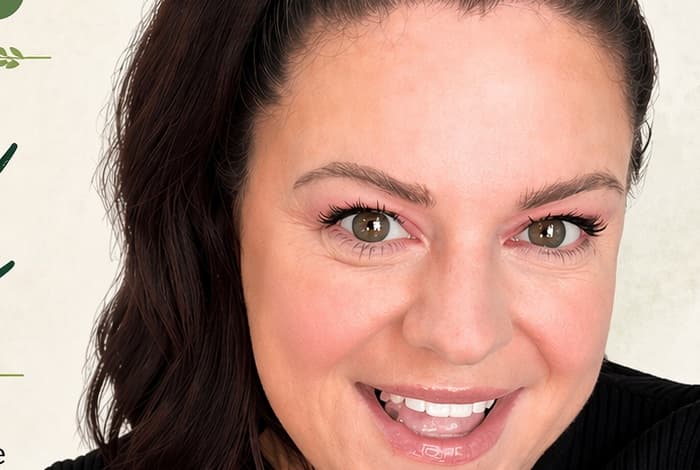
In this episode of Notes to My Nervous System, I talk with Kirsten Perry, 2018 National School Counselor of the Year, international educator, author, and SEL consultant, about professional resilience, burnout, comparison, identity, and what sustainable work actually looks like in schools.
Kirsten has worked at multiple levels of education — from direct school counseling to districtwide leadership and international education. She has coached schools on SEL implementation and supported school counselors across large systems. Our conversation gets underneath a question educators know well: How do you keep doing meaningful work without believing you have to personally carry every need around you?
Educator burnout is not simply a resilience problem
Burnout is often discussed as something an individual educator needs to fix.
- Exercise.
- Meditate.
- Set boundaries.
- Think positively.
- Those things may help some people.
But workload, staffing, role clarity, administrative support, autonomy, school climate, resources, and organizational expectations matter too. That distinction is particularly relevant to school counselors, who can find themselves responsible for academic planning, mental-health concerns, crisis response, attendance, SEL implementation, college and career work, testing, administrative duties, and everything that falls between clearly defined roles.
Kirsten's current work specifically emphasizes building sustainable systems rather than placing the entire burden of student and educator well-being on individual school counselors. Her book with Melissa S. Ockerman likewise includes strategies for distributing workload and preventing burnout. The question should not only be: How do we make educators more resilient? It should also be: What are we asking them to be resilient to — and can the system itself be improved?
What does resilience actually mean?
Resilience is sometimes treated like an unlimited internal resource. It is not. People can adapt to difficult circumstances, learn new strategies, build support, and recover from setbacks. But resilience should not become shorthand for: You should be able to tolerate whatever the system asks of you. In education, sustainable resilience may involve knowing when to persist — and when something about the environment, workload, role, or expectations needs to change. That is a more useful definition than measuring resilience by how much stress someone can absorb without showing it.
Why comparison becomes dangerous in education
Educators spend a lot of time around people who care deeply about their work. That can be inspiring.
It can also create a strange comparison cycle.
- Someone else created the program.
- Someone else won the award.
- Someone else seems to have the perfect classroom.
- Someone else's students are showing better outcomes.
- Someone is publishing, presenting, leading a committee, earning another credential, or somehow doing all of it at once.
Social comparison is normal.
The problem comes when another person's visible accomplishments become the standard against which you judge your entire professional life. Kirsten and I talk about the pressure to compare and what happens when professional recognition begins influencing how someone understands their value. A useful question is: Am I learning from this person — or using their life as evidence that mine is inadequate? Those are very different processes.
What happens after professional success?
Recognition can be meaningful. It can open doors. It can validate years of difficult work. But an award does not make someone immune to uncertainty, burnout, self-doubt, or changing priorities. Kirsten was named the American School Counselor Association's National School Counselor of the Year in 2018 for her work at Lawndale Community Academy in Chicago and was honored by Michelle Obama. Her career since then has included district leadership in Chicago Public Schools, international education, SEL consulting, and authorship. That makes this conversation useful beyond a conventional "success story." Success does not finish identity development. Sometimes achieving something significant creates a new question: What do I want to do with the next part of my life?
Authenticity at work does not mean saying everything you think
"Be authentic" is popular advice. Professional authenticity is more complicated. Schools are collaborative environments. Teachers, counselors, administrators, families, students, and community members have different responsibilities and perspectives. Being authentic does not require saying everything you feel in every situation. It may mean that the way you work remains reasonably aligned with your values.
- You can disagree respectfully.
- Change direction.
- Acknowledge uncertainty.
- Set limits.
- Allow your professional identity to evolve.
- And make decisions without requiring them to look impressive from the outside.
That kind of authenticity has much less to do with "teaching your nervous system that it is safe" and much more to do with living and working in greater alignment with what matters to you.
Neuroplasticity is real. The nervous system changes through experience, learning, development, injury, rehabilitation, and many other processes. But that does not mean adopting a particular mindset literally rewires the brain in a predictable way. Research does support psychological interventions and learning processes changing behavior, cognition, and — in some circumstances — measurable brain function or structure. That is different from claiming: Positive mindset → new neural pathway → resilience. A better practical interpretation is: Repeatedly practicing new ways of thinking or behaving can make those responses more familiar and accessible over time.
Social-emotional learning should be a system, not another task
Kirsten's professional work gives this episode an important educational dimension. SEL can become unsustainable when one person is expected to own it.
- The counselor runs the lessons.
- The counselor handles behavior.
- The counselor fixes climate.
- The counselor responds to every emotional need.
That is not truly systemic implementation.
Kirsten and Melissa Ockerman's The ABCs of Social Emotional Learning for School Counselors and Administrators describes an Adaptive, Balanced, and Collaborative approach that explicitly emphasizes shared responsibility, sustainable implementation, community voice, and alignment across school systems. Effective SEL infrastructure should increase organizational capacity. It should not simply increase the counselor's workload.
What does sustainable SEL look like?
A sustainable approach asks questions such as:
- Who owns which responsibilities?
- What happens universally for all students?
- What requires more targeted support?
- What data actually inform decisions?
- What can teachers realistically implement?
- What needs clinical or specialized expertise?
- What practices duplicate existing work?
- What can be stopped?
Those are implementation questions, not just emotional-wellness questions. And they matter because even a strong intervention can fail when the burden of using it is too high.
When your professional identity changes
Kirsten's career has moved through classroom-facing work, school counseling, district leadership, higher education, international education, consulting, writing, and systems leadership. That raises another important topic: You are allowed to change professionally. The work that was right for you ten years ago may not be the work you want today. Changing direction does not erase previous expertise. Sometimes expertise is precisely what gives someone enough perspective to see the next problem differently. For educators in particular, that matters. Leaving one role, changing schools, moving into leadership, returning to direct service, or pursuing a completely different path does not necessarily mean the previous chapter failed. Careers develop too.
In This Episode, We Discuss
- Educator and school counselor burnout
- Why resilience should not mean tolerating unsustainable working conditions
- Social comparison and professional self-worth
- Kirsten Perry's path from school counseling to national recognition and systems leadership
- How professional identity changes over time
- What neuroplasticity actually means — and why "mindset rewires your brain" goes too far
- Authenticity versus perfectionism in professional settings
- Why SEL should be distributed across systems rather than placed on one person
- Building sustainable approaches to student and educator well-being
- What happens when meaningful work begins costing too much
- How educators can remain committed without believing they must personally solve everything
Episode Highlights
Resilience and professional growth
How experiences, practice, and changing perspectives shape the way we respond to difficult periods without reducing resilience to a simple "brain rewiring" claim.
Comparison and burnout
What happens when another person's accomplishments become the measuring stick for your own career.
Authenticity in high-pressure environments
Professional identity, changing your narrative, and finding a version of success that remains aligned with your values.
Protecting capacity in work and life
Practical ways to think about workload, demands, boundaries, and what sustainable professional engagement can look like.
Frequently Asked Questions
There is rarely one cause. Workload, role ambiguity, staffing, crisis demands, administrative responsibilities, student needs, inadequate resources, organizational climate, and personal circumstances may all contribute.
Individual resilience strategies may help some educators manage stress, but they cannot compensate for chronically unsustainable workload or organizational conditions. Both individual and system-level factors matter.
Not in the simple way that phrase is commonly used. The brain is plastic and changes through learning and experience, but a particular mindset does not predictably "rewire" the nervous system. Behavioral and cognitive practice can help make new responses more familiar over time.
Social-emotional learning generally refers to approaches intended to support competencies such as self-awareness, self-management, social awareness, relationship skills, and responsible decision-making. Implementation models and evidence vary depending on the specific program and context.
School counselors can play an important role, but sustainable schoolwide SEL generally requires shared responsibility across leadership, educators, student-support professionals, families, and other members of the school community. Kirsten Perry's published work specifically emphasizes this collaborative systems approach.
It requires more than selecting activities. Role clarity, leadership support, implementation burden, staff capacity, culturally responsive practice, data use, alignment with existing systems, and long-term sustainability all matter.
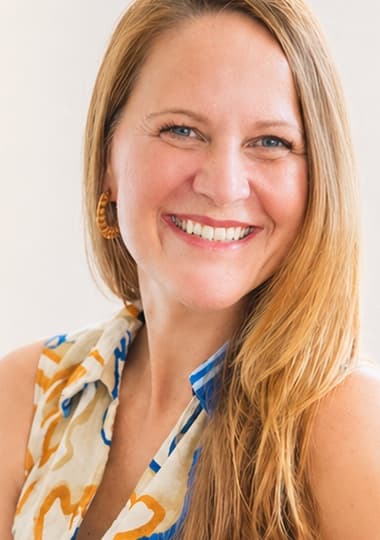
From Erin Vandermore, Host
Before becoming a therapist, I spent years working in schools. One thing I learned there was that an intervention can be a very good idea and still fail if the people responsible for implementing it do not have the time, clarity, or capacity to use it. That is a systems problem — not a motivation problem.
This episode has one of the most natural bridges to Mind Circuit™ in your entire podcast catalog. Mind Circuit was not designed to give educators another SEL curriculum to teach. It addresses a narrower operational problem: Instruction gets disrupted. What is a brief, standardized way to help the classroom return to participation without creating another major demand on the teacher?
The sequence is: Notice → Match → Reset → Return to instruction. Teachers choose what best describes what they can observe, guide a brief 30–90 second reset, and return to teaching. Mind Circuit is designed to fit inside instruction rather than become another program competing with instruction. It complements broader SEL, MTSS, PBIS, counseling, and student-support systems rather than replacing them. Mind Circuit is an educational classroom tool. It is not psychotherapy and does not diagnose or treat mental-health conditions.