There is a familiar pattern in education. The workload becomes unsustainable. People are exhausted. And then we give educators another training about taking care of themselves.
- Drink water.
- Set boundaries.
- Practice gratitude.
- Remember your why.
Those things may be useful. But they do not reduce a caseload, clarify an impossible role, create planning time, improve staffing, or remove another task from an already overloaded day.
In this episode of Notes to My Nervous System, I talk with Kirsten Perry, 2018 National School Counselor of the Year, former Chicago Public Schools counselor and district leader, author, and SEL consultant, about burnout in education and what actually puts educators and school counselors at risk.
The central question is not: How do we make educators better at tolerating stress? It is: What is creating the stress, what can the individual realistically change, and what requires the system itself to change?
What is educator burnout?
Burnout is more specific than simply having a difficult week. The World Health Organization describes burnout as a syndrome associated with chronic workplace stress that has not been successfully managed, involving exhaustion, greater mental distance or cynicism toward one's work, and reduced professional efficacy. WHO specifically classifies it as an occupational phenomenon rather than a medical condition.
An educator can be extremely stressed without necessarily experiencing burnout. Someone experiencing fatigue, panic, depression, depersonalization, severe sleep problems, or other significant symptoms may also have something occurring that deserves evaluation beyond a burnout framework.
Why are educators burning out?
There is no single cause.
- Workload matters.
- Support matters.
- Role clarity matters.
- Leadership matters.
- Resources matter.
- Relationships at work matter.
- Autonomy matters.
A 2025 systematic review examining 40 studies found that high workload and inadequate social support were repeatedly associated with teacher emotional exhaustion and burnout. The authors rated the overall evidence as moderate and emphasized organizational factors, not simply individual coping ability. This is one reason the conversation about educator well-being has to extend beyond self-care. You cannot mindfulness your way out of an organizational structure that continually demands more labor than people have time to provide.
School counselor burnout has some specific risks
School counselors occupy an unusually complex position inside schools.
They may be expected to handle:
- Academic concerns.
- Student mental health.
- Crisis response.
- Attendance.
- Behavior.
- Family needs.
- College and career planning.
- SEL.
- Testing.
- Administrative responsibilities.
And whatever urgent problem happens to arrive that morning.
The American School Counselor Association has identified contributors to school-counselor stress including role ambiguity, inappropriate or extraneous assignments, large caseloads, professional conflict, weak principal-counselor relationships, and limited decision-making authority. That matters because burnout prevention cannot be reduced to whether a counselor remembered to practice self-care. Sometimes the job itself needs redesign.
Self-care matters. It just cannot carry the whole solution.
I would change the current episode wording from: "Why traditional self-care fails teachers." to: "Why self-care alone cannot solve educator burnout."
That distinction protects the science.
- Sleep matters.
- Exercise matters.
- Relationships matter.
- Recovery time matters.
- Mental-health treatment matters when indicated.
- Boundaries can matter.
But none of those interventions eliminate excessive workload or organizational dysfunction.
Both things can be true: People need tools for managing stress. And: Organizations need to stop creating unnecessary stress.
People experiencing burnout may feel exhausted, detached, irritable, cynical, overwhelmed, emotionally depleted, less effective, or unable to recover adequately from work. Those experiences involve psychological and physiological processes. But burnout cannot be accurately reduced to being stuck in sympathetic "fight or flight" or dorsal-vagal shutdown. The WHO frames it as; Chronic workplace stress has not been successfully managed.
What happens when the problem is the system?
This is where Kirsten brings unusual credibility to the conversation. She did not observe school stress from outside education. She worked inside it. Kirsten served as a school counselor in Chicago Public Schools, then moved into district-level leadership roles supporting SEL and comprehensive school counseling. Her professional record includes coaching 27 schools on SEL-MTSS implementation and supporting counseling programs across hundreds of Chicago schools.
She also knows what high-performing educators often do when systems have gaps:
- They compensate.
- They stay late.
- They answer one more email.
- They take the extra student.
- They build the missing resource.
- They become the person everyone relies on.
And eventually, extraordinary individual effort can disguise an organizational problem. That is one of the most important ideas in this episode. A system should not require heroic effort to function normally.
The danger of the "resilient educator" narrative
Resilience is valuable. But resilience can become distorted when institutions use it to shift responsibility downward. An educator says: "This workload is not sustainable." And the response becomes: "Have you practiced self-care?" That is not resilience. That is avoiding the operational problem.
Individual skills are most defensible when they exist alongside appropriate staffing, realistic expectations, role clarity, administrative support, professional autonomy, and systems that reduce preventable burden. Otherwise, "resilience" can become a polite way of asking people to endure conditions that should be improved.
School counselors are not the emotional emergency department for the entire building
One of the reasons role clarity matters is that schools contain multiple levels of student need. Some needs are universal. Some require targeted support. Some require specialized mental-health or disability services. A school counselor cannot reasonably become the solution for every emotional, behavioral, academic, attendance, family, and crisis-related problem in a building. And teachers cannot be expected to provide therapy while simultaneously delivering instruction. Effective systems differentiate responsibilities. That protects students and staff. The question becomes: What can be handled universally and efficiently in the classroom — and what genuinely requires specialized support?
What sustainable student support actually looks like
Sustainable systems reduce unnecessary friction. Teachers know what they are expected to do. Counselors know which problems belong within their role. Administrators understand what requires system-level intervention. Staff have practices that can be implemented without extensive training or disruption. Students who need specialized services still receive them. And universal supports do not require every ordinary classroom disruption to become a referral. That is a fundamentally different model from continually adding programs. Sometimes the better intervention is the one that asks less of the adult using it.
Why educator well-being affects implementation
Schools purchase many good programs. The difficult part is implementation. A tool can be evidence-informed. Beautifully designed. Well intentioned. And completely unusable at 10:17 on a Tuesday morning when a teacher has 27 students waiting.
Implementation burden matters. Time matters. Training burden matters. Number of steps matters. Whether a tool interrupts instruction matters. Whether teachers believe it solves a real problem matters. This is why educator well-being and implementation science overlap. When staff capacity is already constrained, adding complexity carries a real opportunity cost.
You do not have to choose between supporting educators and supporting students
That is sometimes treated like a trade-off. It should not be. A system that repeatedly exhausts the adults responsible for implementing student supports is unlikely to be sustainable. Reducing unnecessary educator burden can itself improve the reliability with which student supports are delivered. Kirsten's career has consistently focused on systems-level implementation rather than expecting a single counselor to carry the entire emotional life of a school. She was named the 2018 ASCA School Counselor of the Year for her work at Lawndale Community Academy in Chicago, where she was recognized nationally for her student and schoolwide impact.
In This Episode, We Discuss
- What teacher and school counselor burnout actually means
- Why burnout should not be described as a specific nervous-system state
- Workload, role overload, and organizational contributors to burnout
- Why self-care can help without fixing a structurally unsustainable job
- School counselor role ambiguity and the pressure to become responsible for everything
- What happens when high-performing educators compensate for broken systems
- The difference between individual resilience and institutional responsibility
- Why schools need clearer tiers of student support
- How implementation burden affects whether educators actually use an intervention
- Why supporting educator capacity and supporting students are not competing goals
- Kirsten Perry's journey from Chicago school counselor to district and international education leadership
- What sustainable change in schools can look like
Episode Highlights
Burnout in education
What chronic occupational stress can look like for educators and why burnout cannot be explained simply as "fight or flight."
School counselor workload and role overload
The patterns that place counselors at risk when too many responsibilities accumulate in one position.
Why self-care alone is not enough
Individual coping strategies matter, but they cannot substitute for reasonable workload, role clarity, staffing, and organizational support.
Creating sustainable change
What educators can advocate for individually — and what requires leadership and systems-level change.
Frequently Asked Questions
Burnout is an occupational phenomenon associated with chronic workplace stress that has not been successfully managed. WHO describes exhaustion, increased mental distance or cynicism toward work, and reduced professional efficacy as its core dimensions.
No. Burnout can involve physiological stress responses, but it is not classified as a nervous-system disorder or medical condition by WHO.
Research identifies multiple contributors, including workload, inadequate organizational support, professional relationships, job demands, and insufficient resources. A 2025 systematic review found workload and insufficient social support were repeatedly associated with emotional exhaustion across teacher populations.
School counselors can face large caseloads, role ambiguity, inappropriate non-counseling responsibilities, professional conflict, poor administrator-counselor relationships, and limited decision-making authority.
Self-care and individual stress-management strategies may help, but they cannot independently correct excessive workload, poor staffing, unclear roles, or unsupportive organizational conditions. Burnout prevention should address both individual and workplace factors.
No. They can overlap in symptoms such as exhaustion and reduced motivation, but burnout is defined specifically in relation to occupational stress. Significant or persistent symptoms deserve appropriate assessment rather than being assumed to be "just burnout."
There is no single intervention. Reasonable workload, clearer roles, administrative and collegial support, adequate resources, autonomy, and reducing unnecessary job demands are all relevant. Research consistently indicates that organizational conditions matter alongside individual coping.
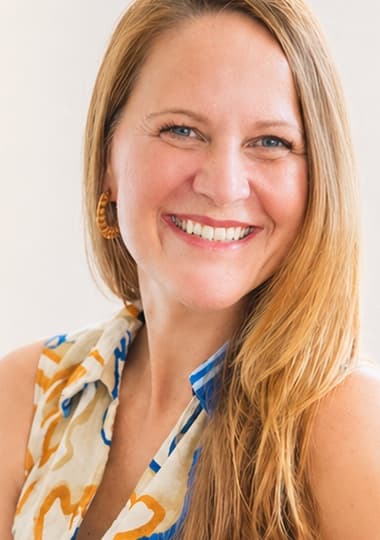
From Erin Vandermore, Host
Erin Vandermore, LCMHC-S, is a licensed mental health therapist, former educator, and founder of Mind Circuit™. Before becoming a therapist and entrepreneur, I worked in Chicago Public Schools as a school counselor, coach, and district-level counseling specialist. Across classrooms, counseling offices, parenting, and therapy, I kept seeing the same problem: We often ask people to think, talk, learn, or problem-solve at the exact moment they are least available to do it. My work now focuses on a practical question: What helps people recover from stress and return to what they need to do next? That question is also at the center of Notes to My Nervous System.